
Cold cutting for precise spark-free cutting in constrained industrial environments.
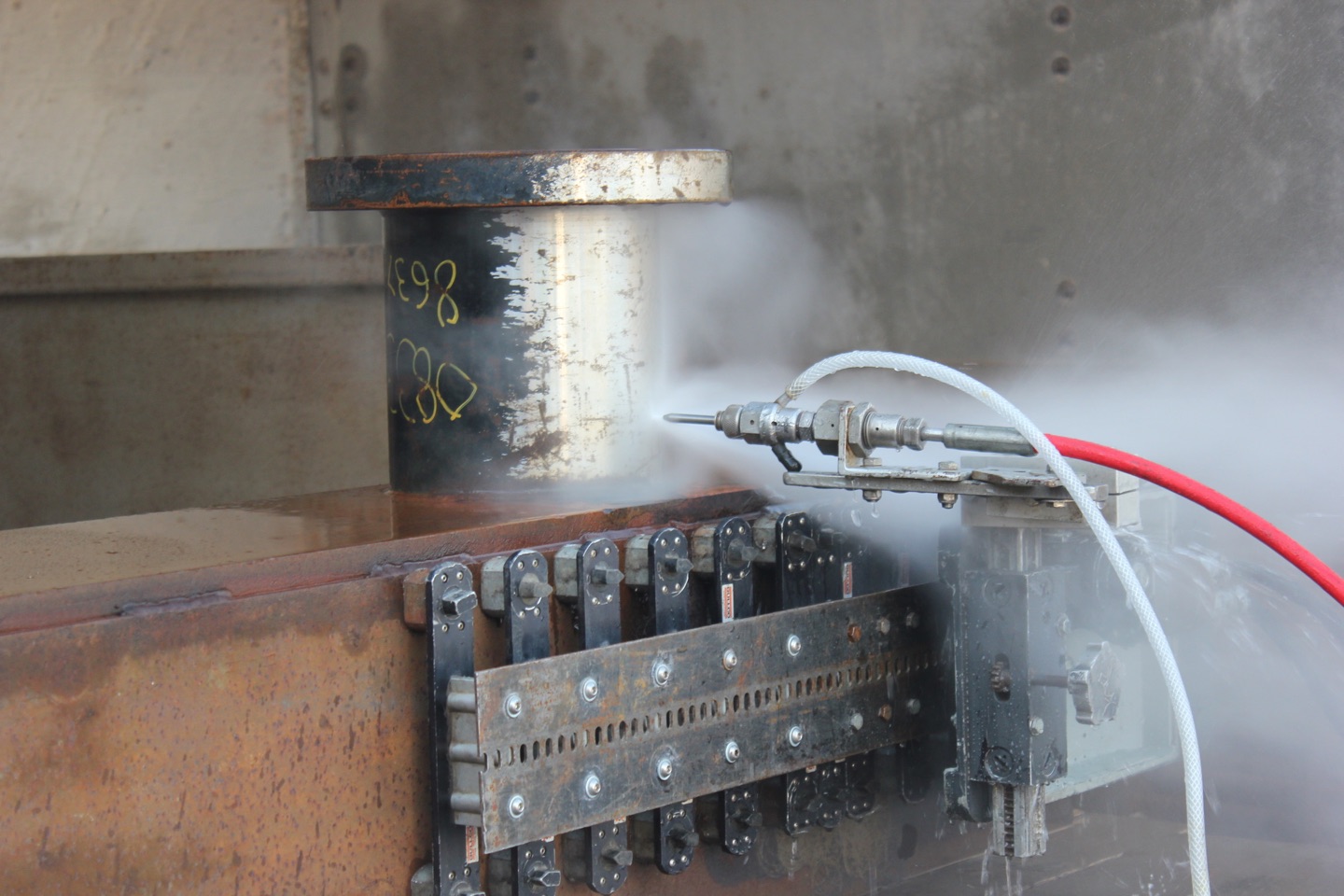
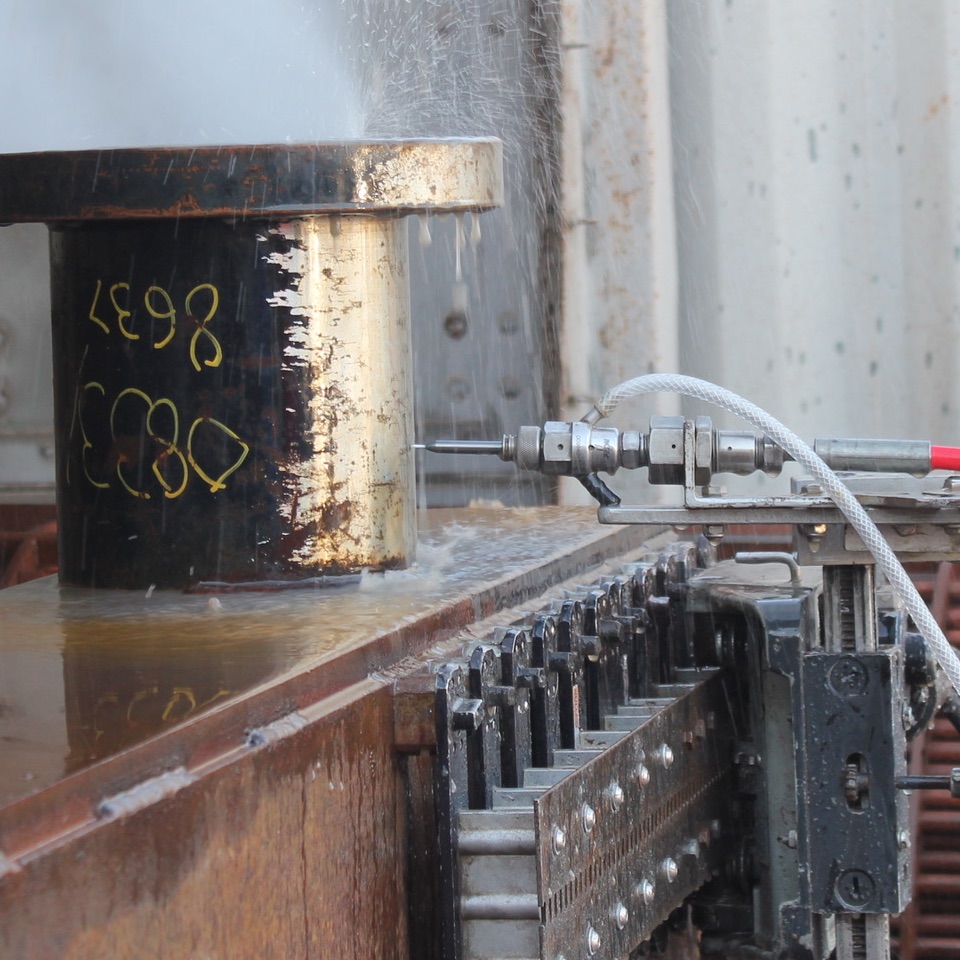
Cold cutting can produce accurate cuts around 1mm wide in steel up to 200mm thick using ultra-high-pressure water jet cutting with abrasive media.
- No heat or spark generation
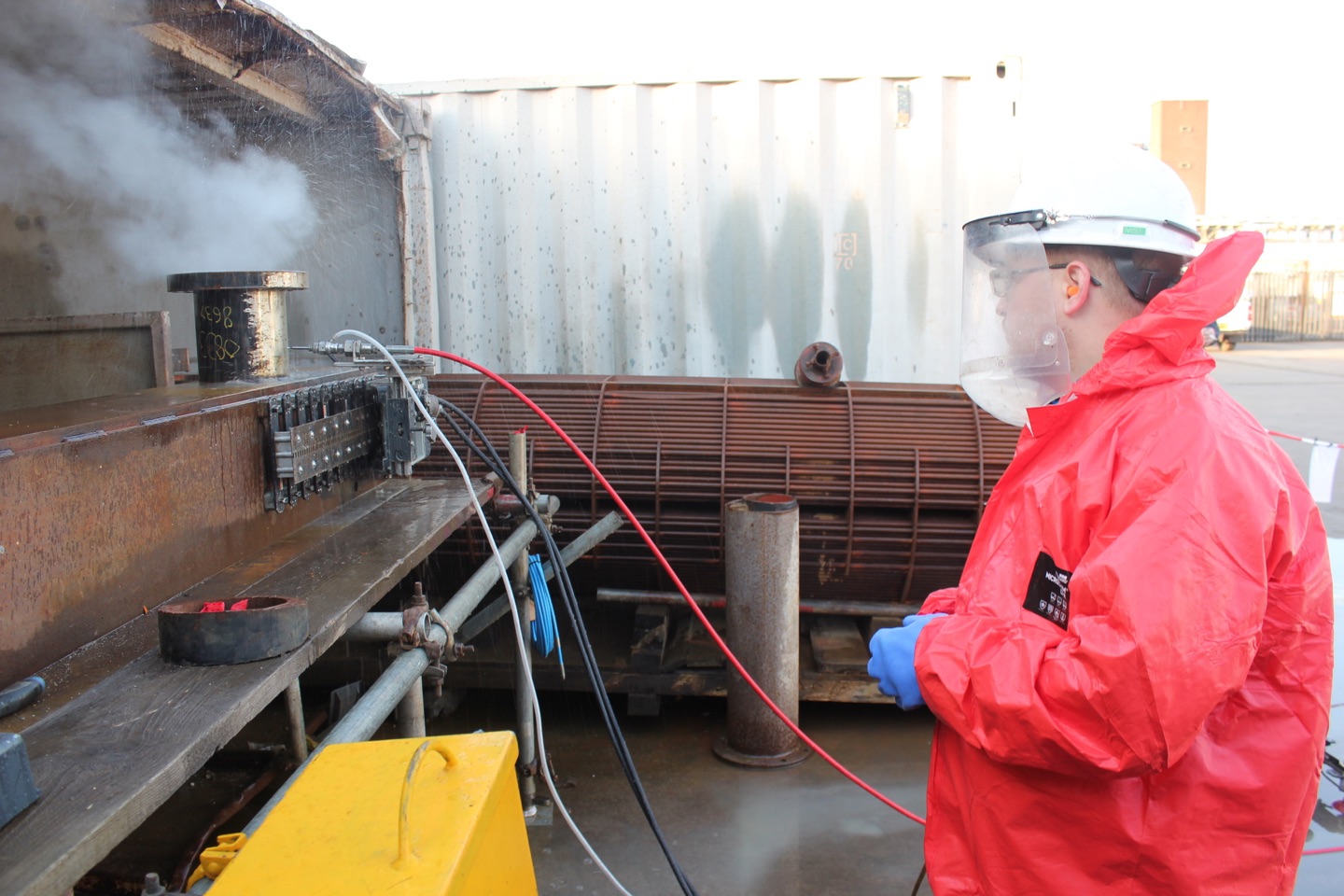
- Remote-controlled operation
- Reduced exclusion zones compared with hot works
- Underwater applications
- Suitable for steel and composite materials
Used where hot work is not practical
Cold cutting is suited to live industrial environments where ignition control, tight access, shutdown timing or material sensitivity make thermal cutting methods less suitable.
Water jet cutting with abrasive media for controlled removal without a heat-affected zone.
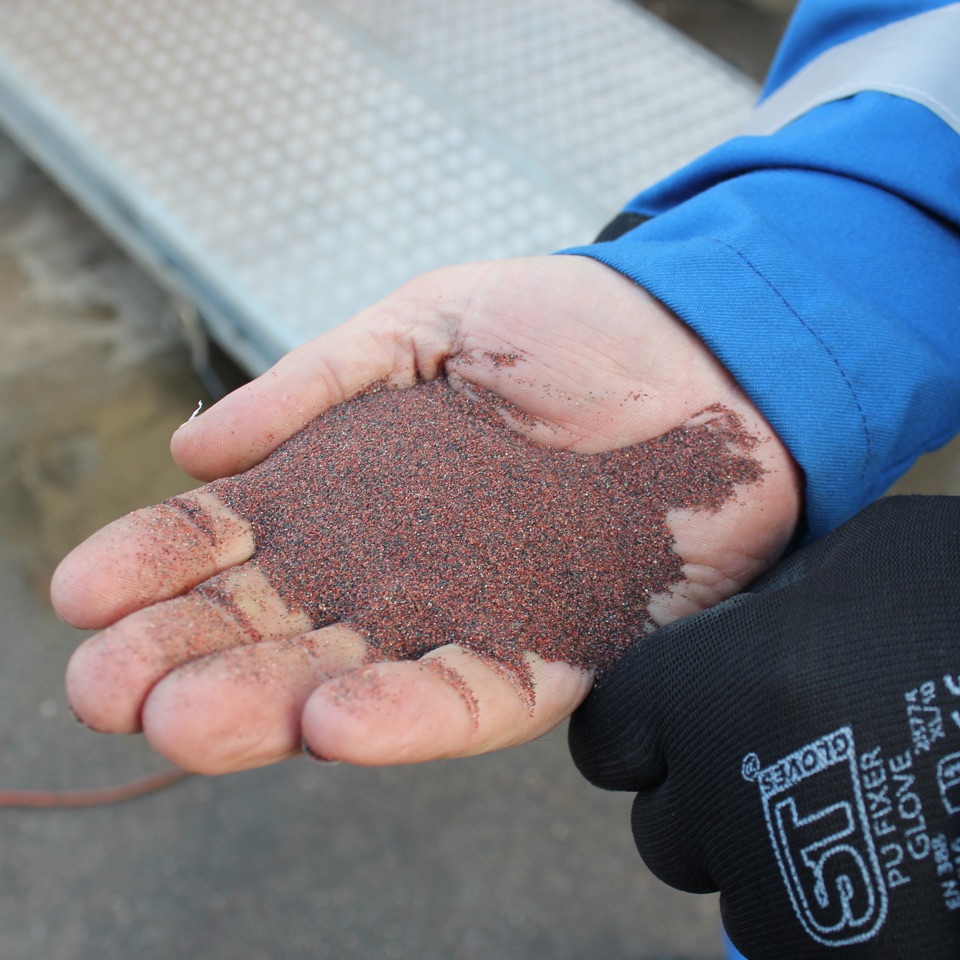
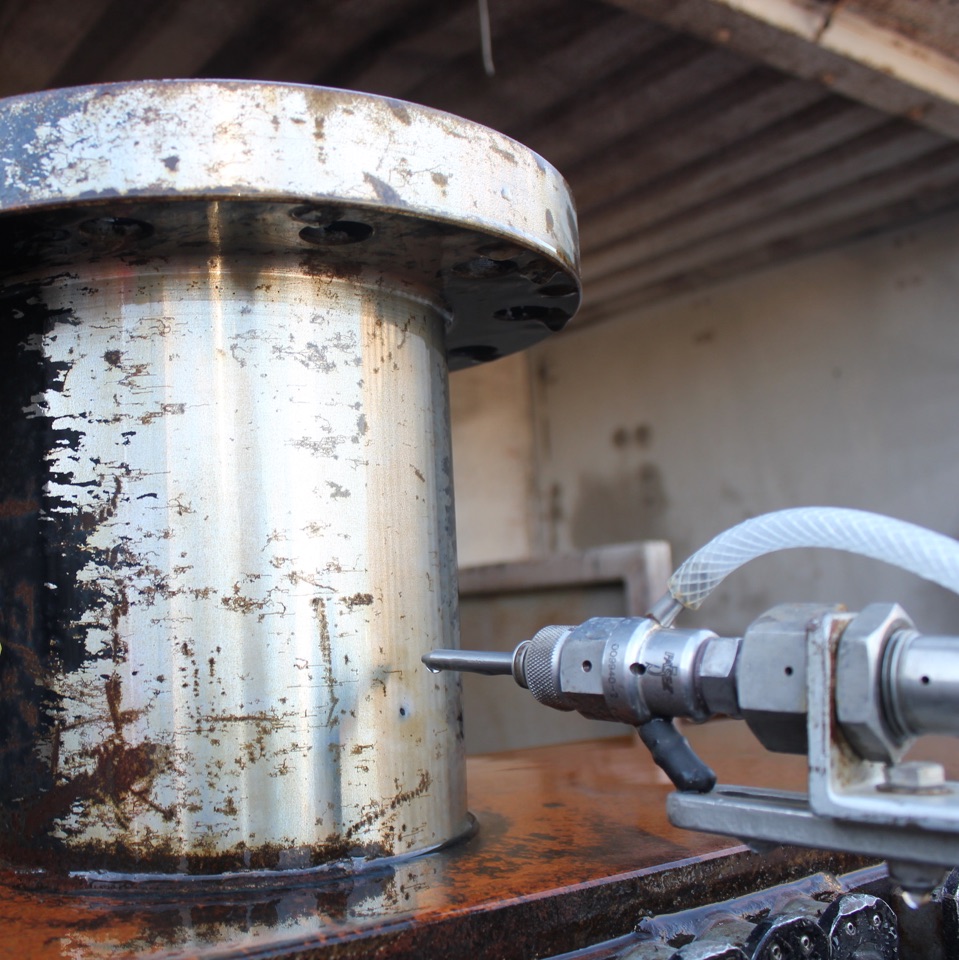
The process uses a fine ultra-high-pressure water jet nozzle that entrains garnet abrasive. This supports accurate cutting without changing metallurgical properties or introducing ignition risks associated with hot cutting methods.
Tight, repeatable cuts
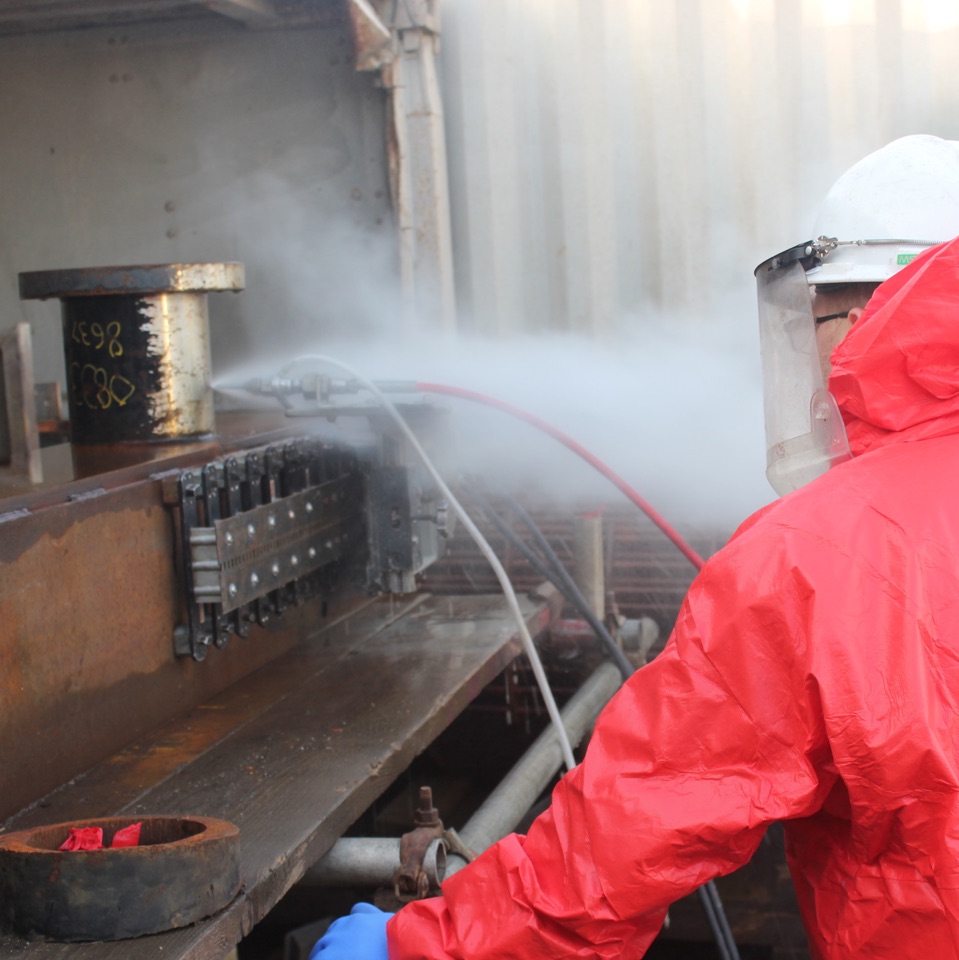
An automated cutting carriage and track system helps maintain precision and repeatability across straight, radial and difficult-access cuts.
Cold process technology
Because the process does not rely on flame or spark, it is well suited to areas where hot works restrictions drive method selection.
Decommissioning
Cold cutting is well suited to dismantling and end-of-life plant work where heat-free separation is required.
Access creation
Cold cutting can be used to form apertures or openings where conventional hot work is unsuitable.
Underwater and awkward access
The method is suitable for horizontal, vertical and radial cuts, including underwater work.
Controlled waste stream
Blast media and swarf remain contained within the water stream, which helps keep clean-up controlled.