
Non-abrasive ACHE and fin fan cleaning for live industrial sites.
ASL PowerStream cleans air cooled heat exchangers where fouling is restricting airflow, increasing outlet temperatures or reducing cooling duty. The work is planned around access, fin condition, operational release windows and waste control.
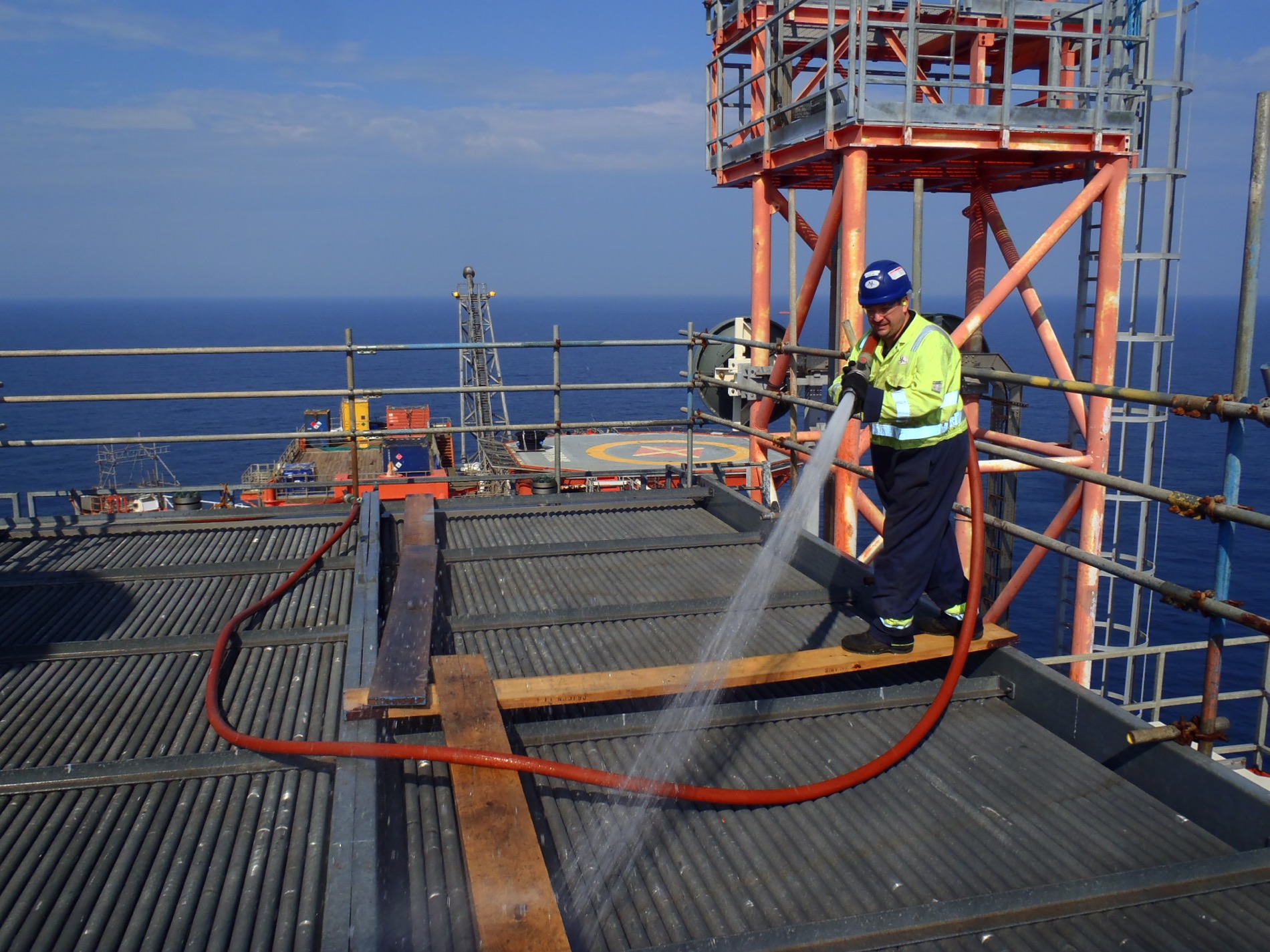
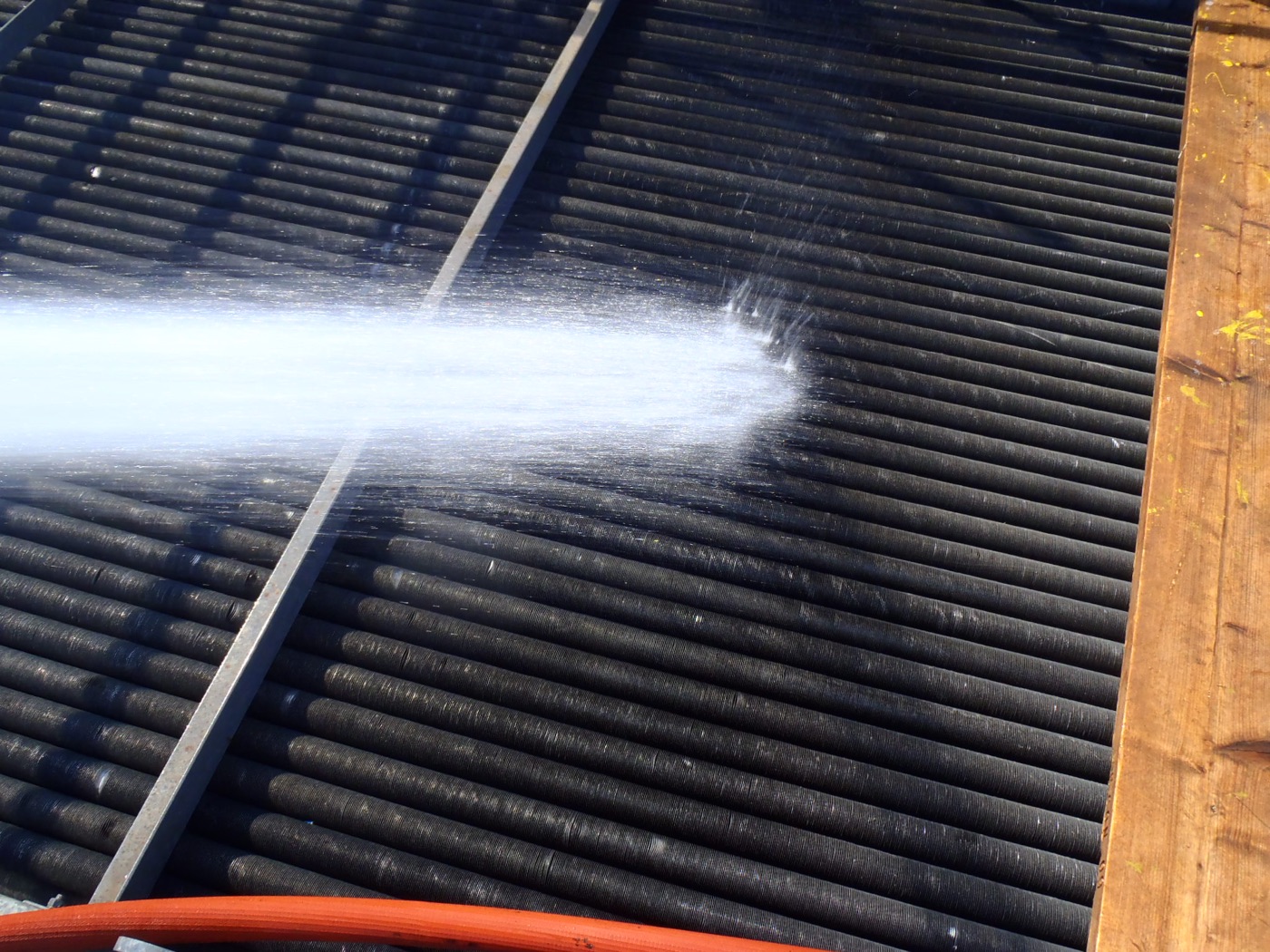
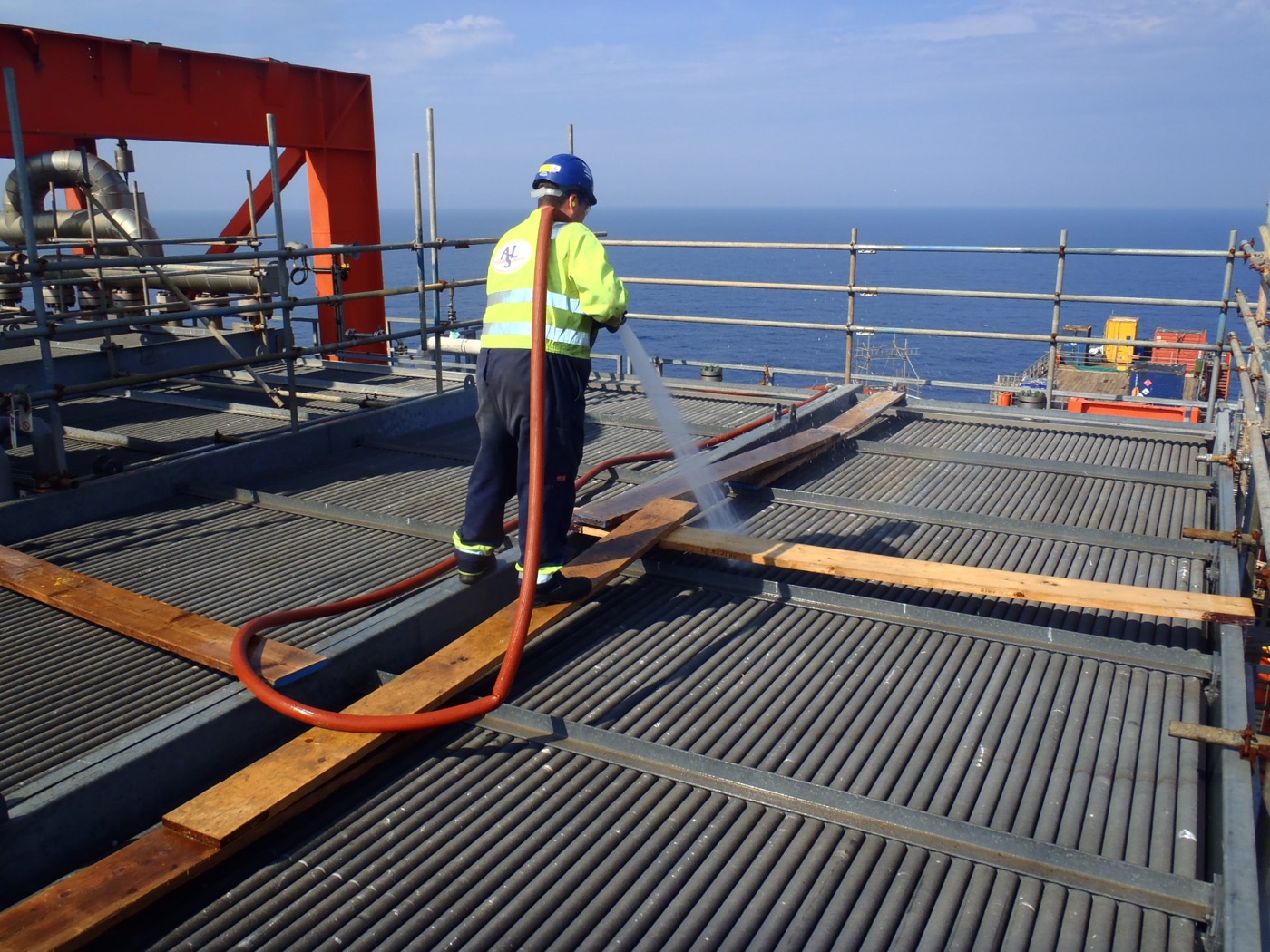
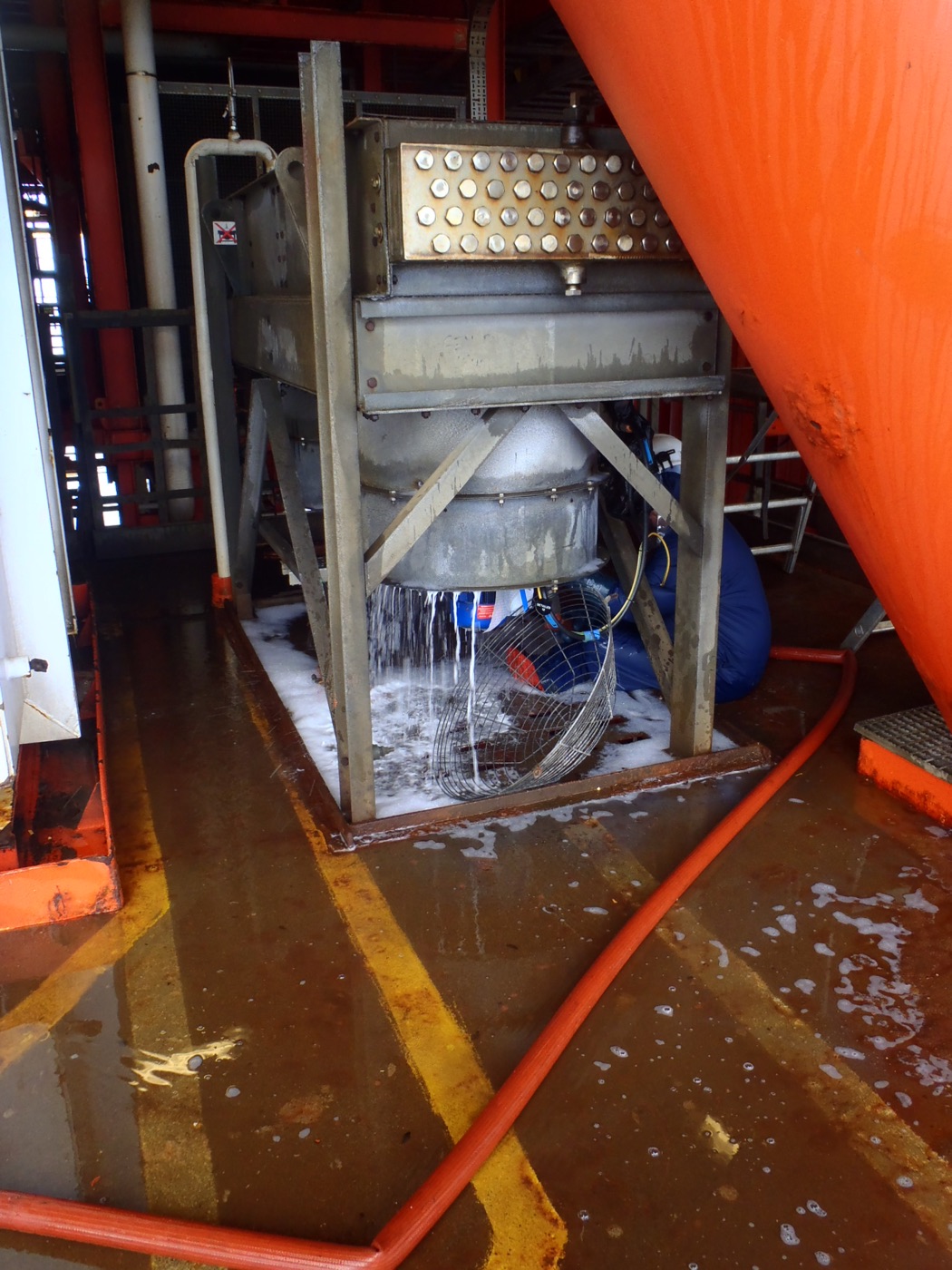
- External finned bundle cleaning for forced and induced draft units
- Online or offline cleaning subject to risk assessment and plant release
- Low-impact cleaning where fins are aged, brittle or easily damaged
- Access planning by fixed platform, scaffold, MEWP or controlled internal routes
- Optional before and after performance measurement
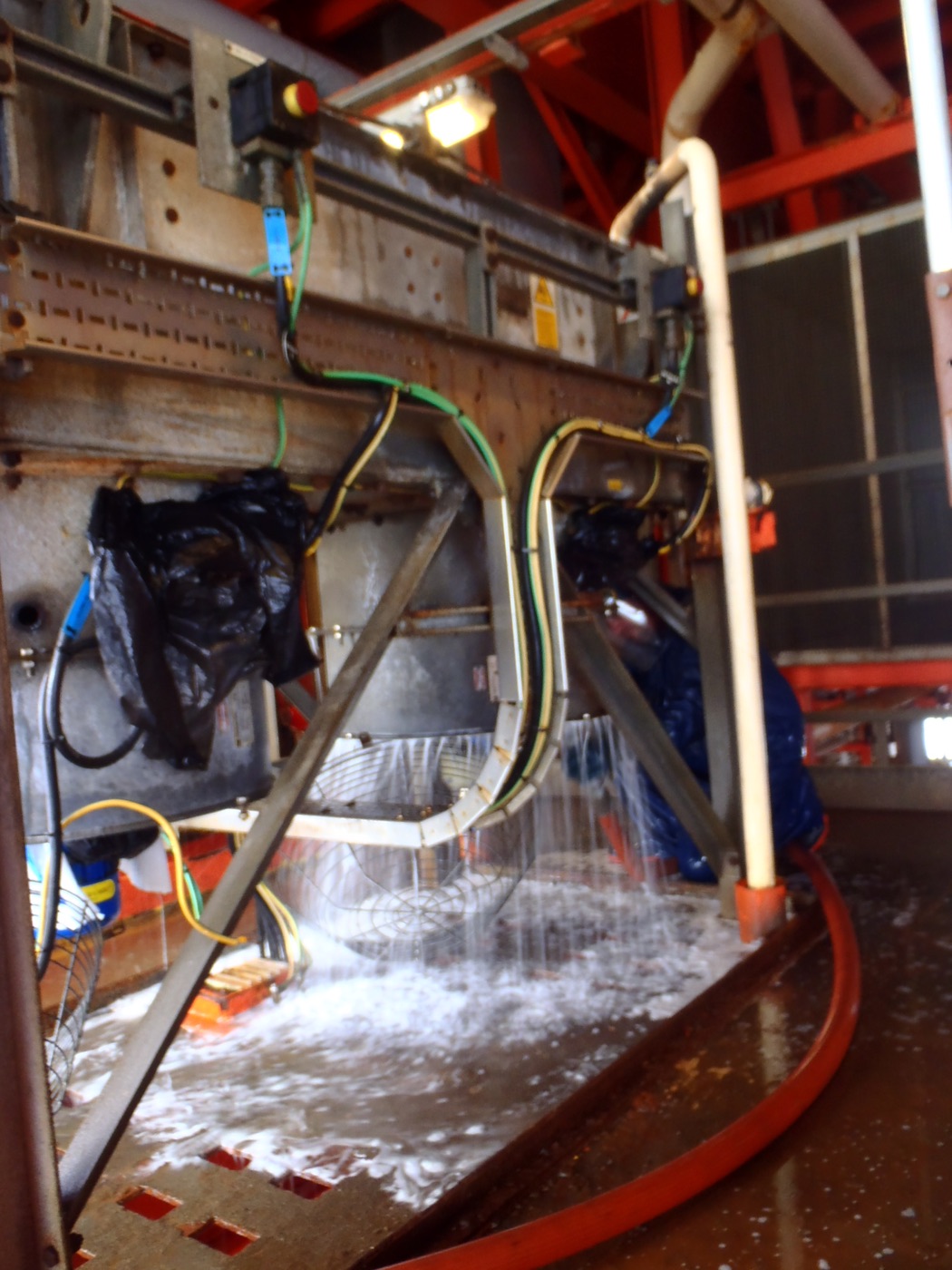
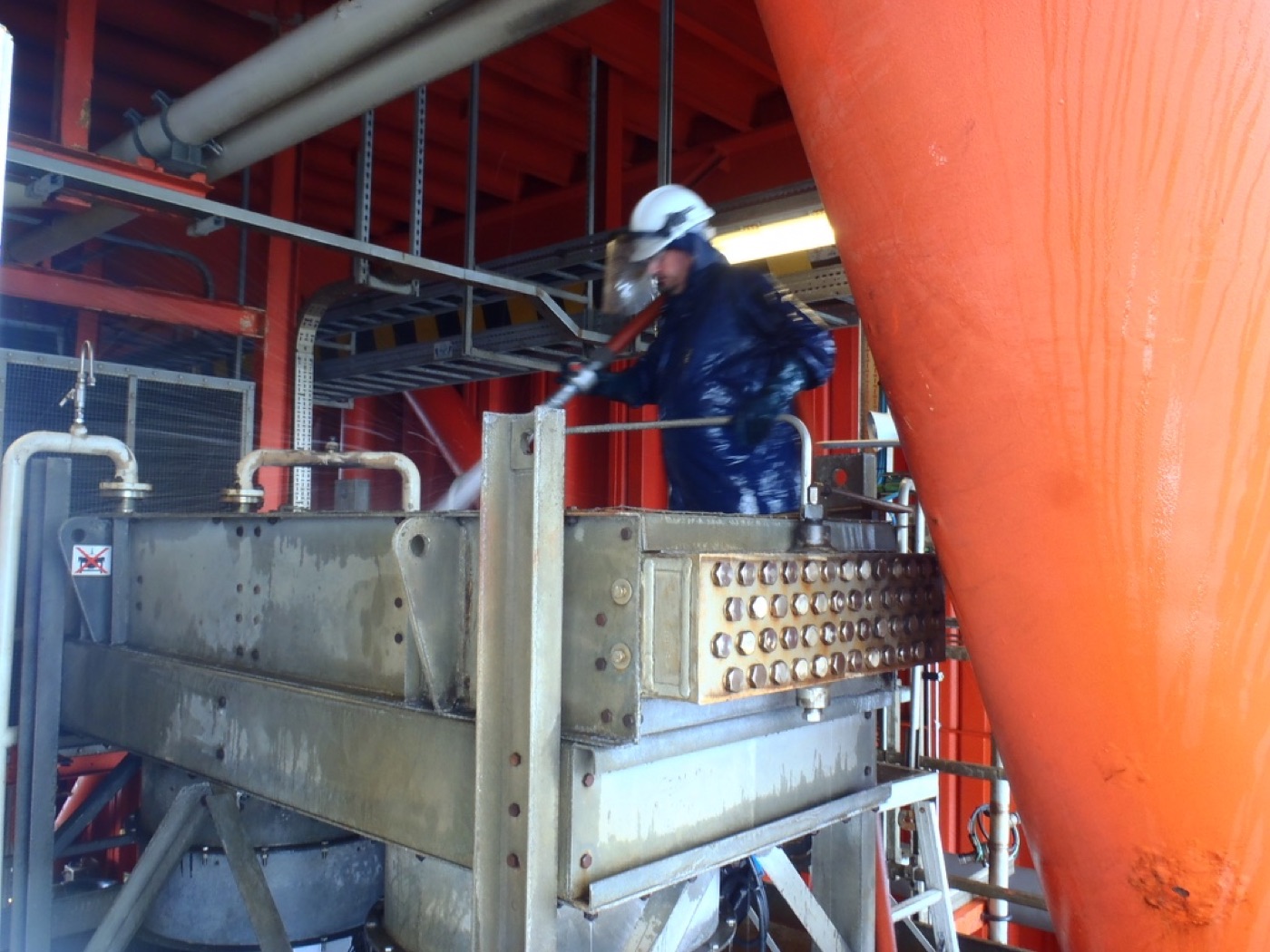
Representative ACHE cleaning photographs.
The photographs show fin fan and ACHE cleaning work in offshore and process-plant environments, including topside bundle washing and internal access cleaning.
Fouling reduces airflow distribution and therefore cooling capacity.
Atmospheric dust, process residue, salt, pollen, debris and oily contamination can collect across finned tubes. The result is lower airflow through the bundle, uneven cooling across the bay and reduced heat rejection during high ambient conditions.
The cleaning method is selected to remove contamination without unnecessarily flattening fins or driving debris further into the bundle. For older ACHEs, the cleaning plan should treat fin condition as a primary constraint rather than an afterthought.
Controlled wash and rinse process
Typical work combines controlled water application, suitable cleaning chemistry where needed, close-proximity cleaning and final rinse. Pressure, flow and nozzle selection are adjusted to the bundle condition and contamination type.
Cleaning planned around plant release
Work packs can be sequenced around day or night release windows, restricted access, noise limits, weather conditions and heat-of-the-day constraints where units cannot remain unavailable for extended periods.
Hydro Clean sample performance data.
Independent analysis of our Hydro Clean process has shown improved cooler performance without production disruption.
Recorded increase in skin temperature after cleaning.
Measured improvement in airflow through the cooler.
Increase in cooling capacity at ambient design temperature.
Results achieved while maintaining production uptime.
Resource planning can support individual problem coolers or larger multi-unit cleaning programmes.
Access method is selected around fan layout, plenum restrictions, scaffold availability and safe segregation.
Debris and wash water controls can include bunding, collection, filtration and disposal routing where required.
Effectiveness can be supported by visual inspection, airflow checks, thermal review and operating data comparison.
Airflow restoration
Improving airflow distribution is central to restoring fin fan performance. Cleaning removes external contamination that blocks the air path through the bundle.
Fin protection
Older units may have brittle or weakened fins. Cleaning pressure, distance, angle and chemical selection must reflect the risk of damaging heat transfer area.
Online and offline planning
Some work can be planned around live operation, while other scopes need fan isolation, internal access or outage coordination. The method statement should make this distinction clearly.
Programme delivery
Large campaigns need crew sequencing, equipment redundancy, welfare, permits, spares, shift patterns and supervisor coverage so progress is not dependent on a single asset or team.
Prepared for large ACHE cleaning enquiries.
We can provide a structured response for procurement teams reviewing availability, technical feasibility, delivery method, mobilisation, safety, access, waste handling, measurement and commercial approach.