
Large-scale ACHE fin fan cleaning response.
We support multi-unit air cooled heat exchanger cleaning programmes where the customer needs availability, technical feasibility, best practice, safety controls and measurement methodology before any pricing stage.
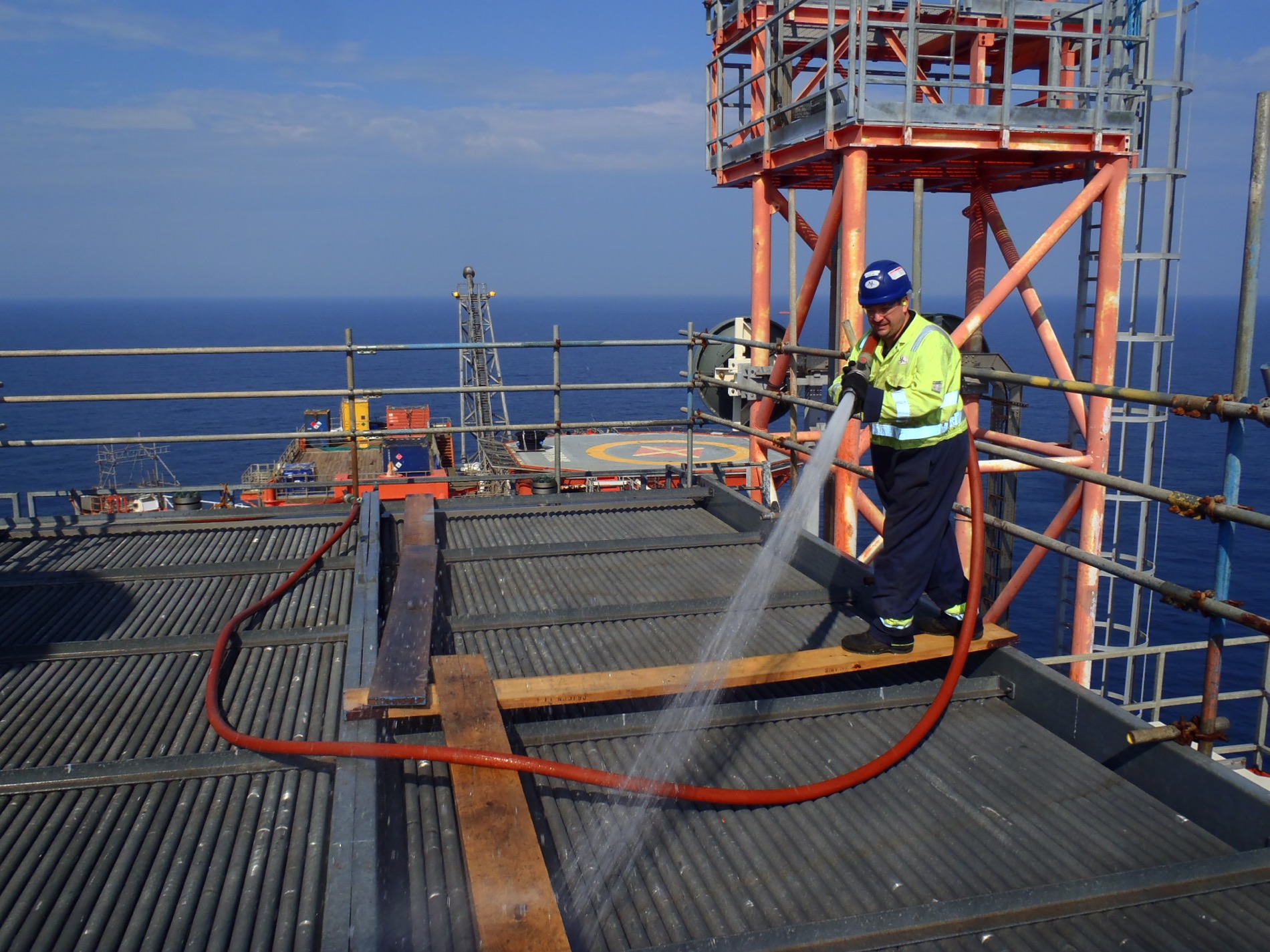
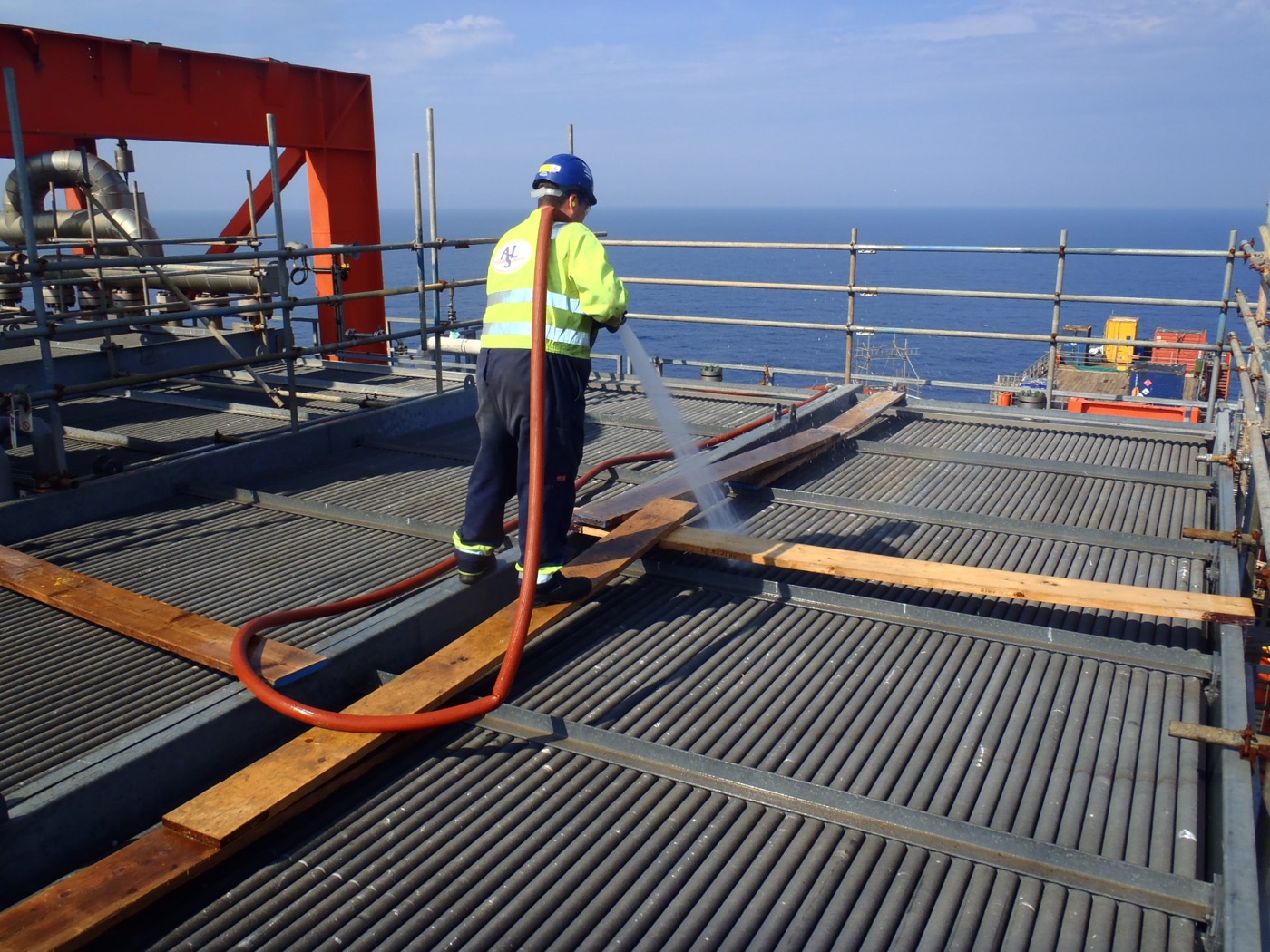
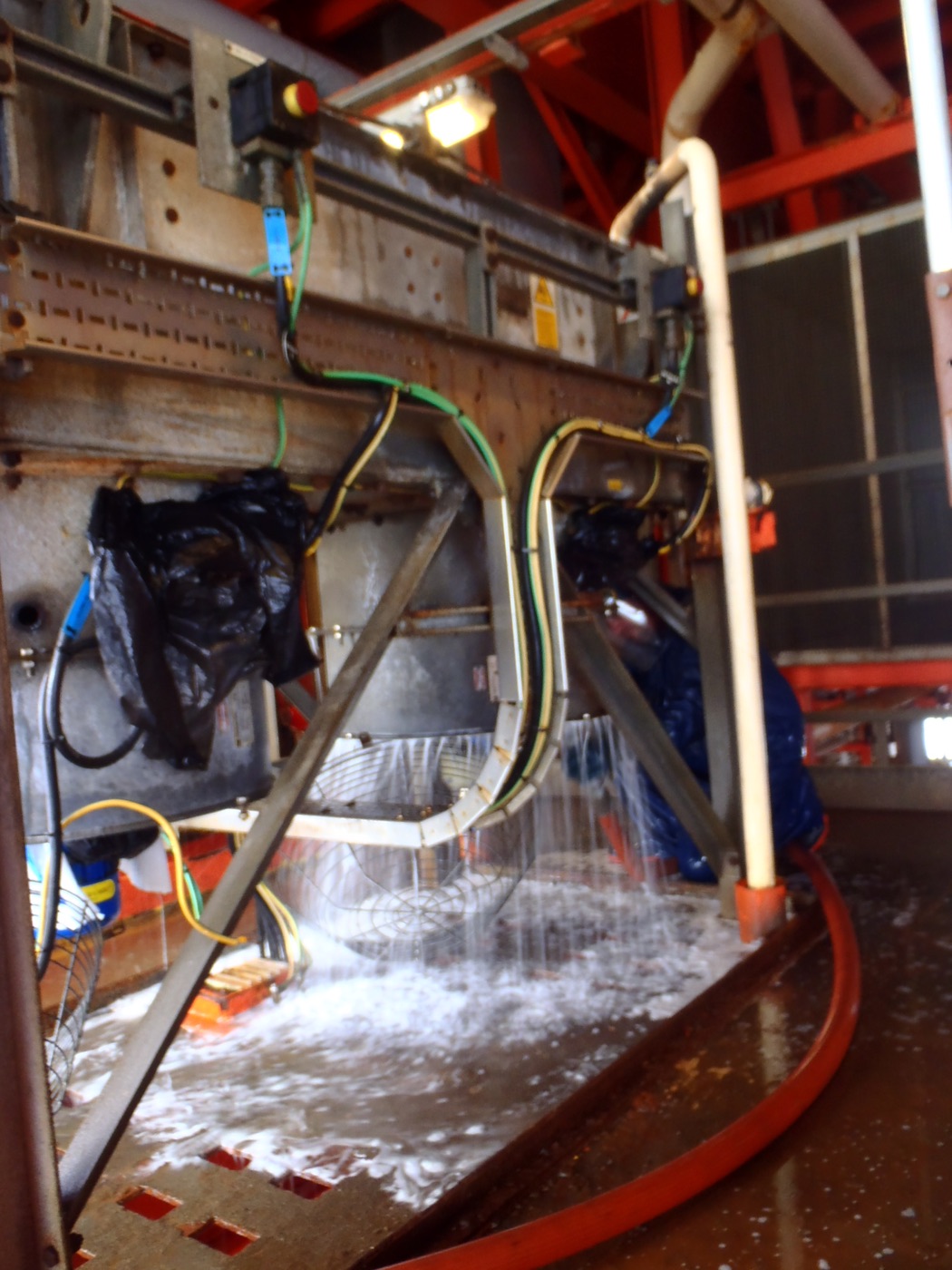
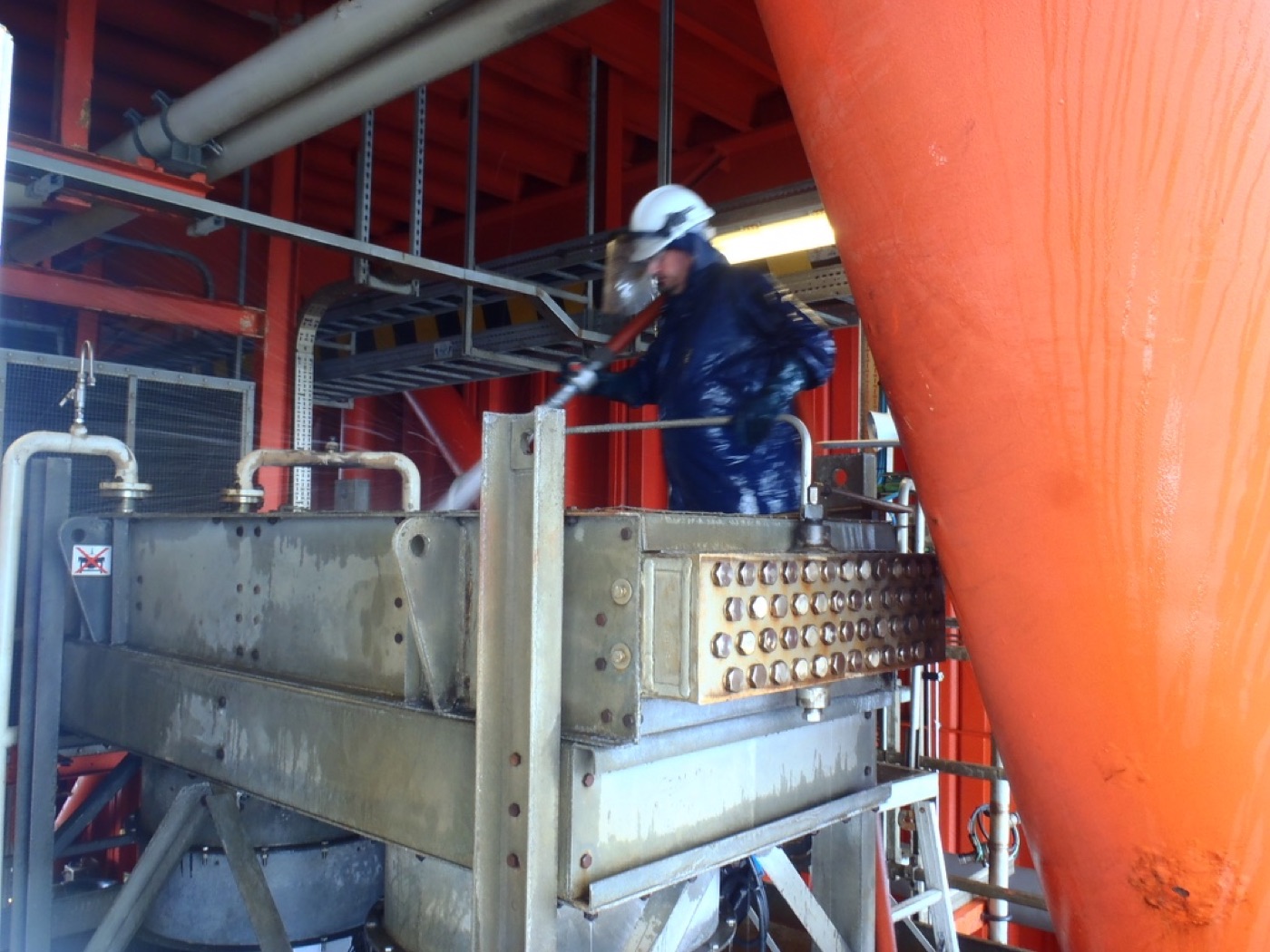
- Non-abrasive external cleaning of ACHE finned bundles
- Campaign planning for approximately 350 fan units
- Careful method selection for aged or brittle fins
- Day, night or multi-shift delivery subject to site constraints
- Evidence-led close-out using inspection and performance data
Actual cleaning access and wash-water conditions.
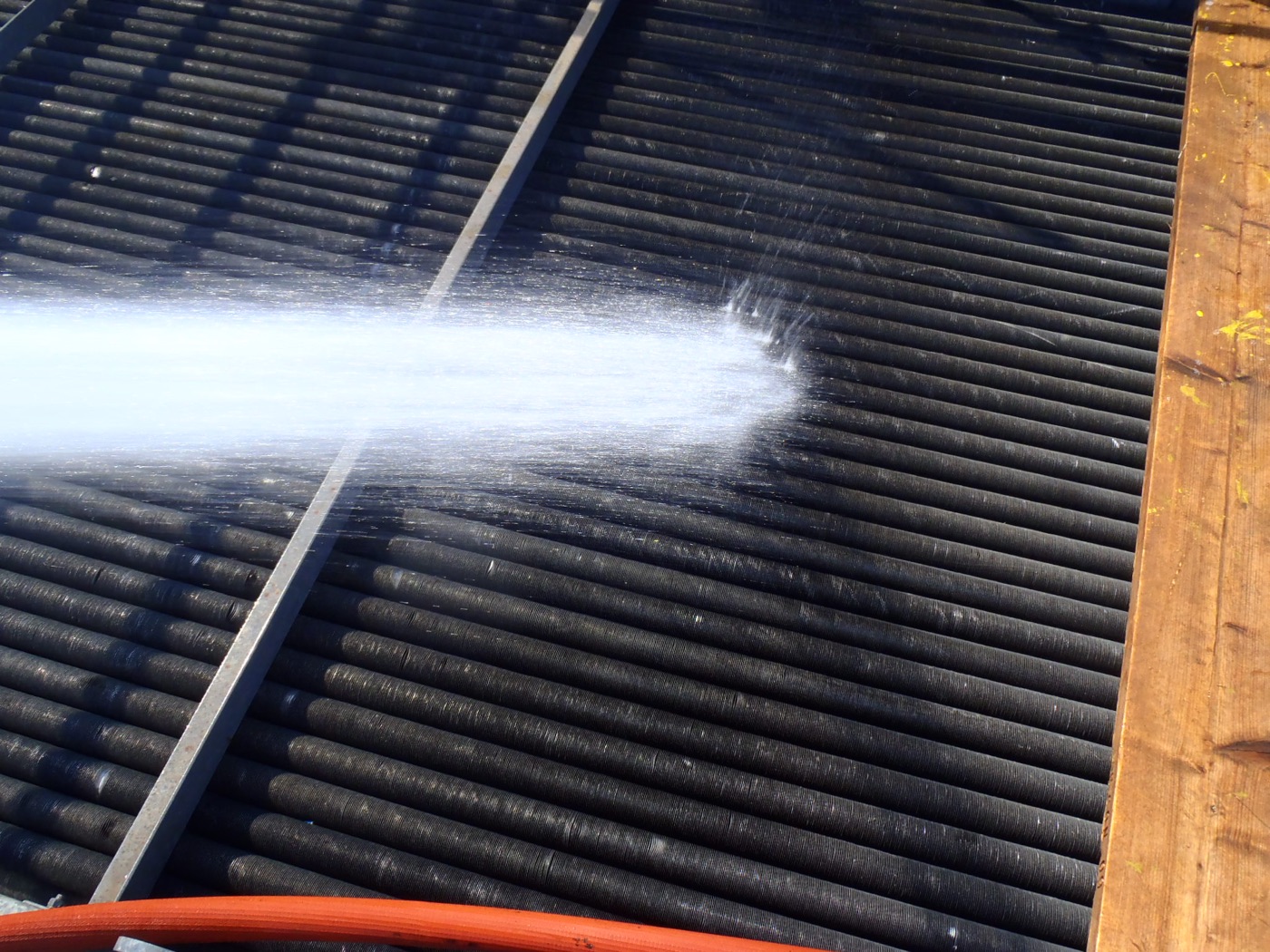
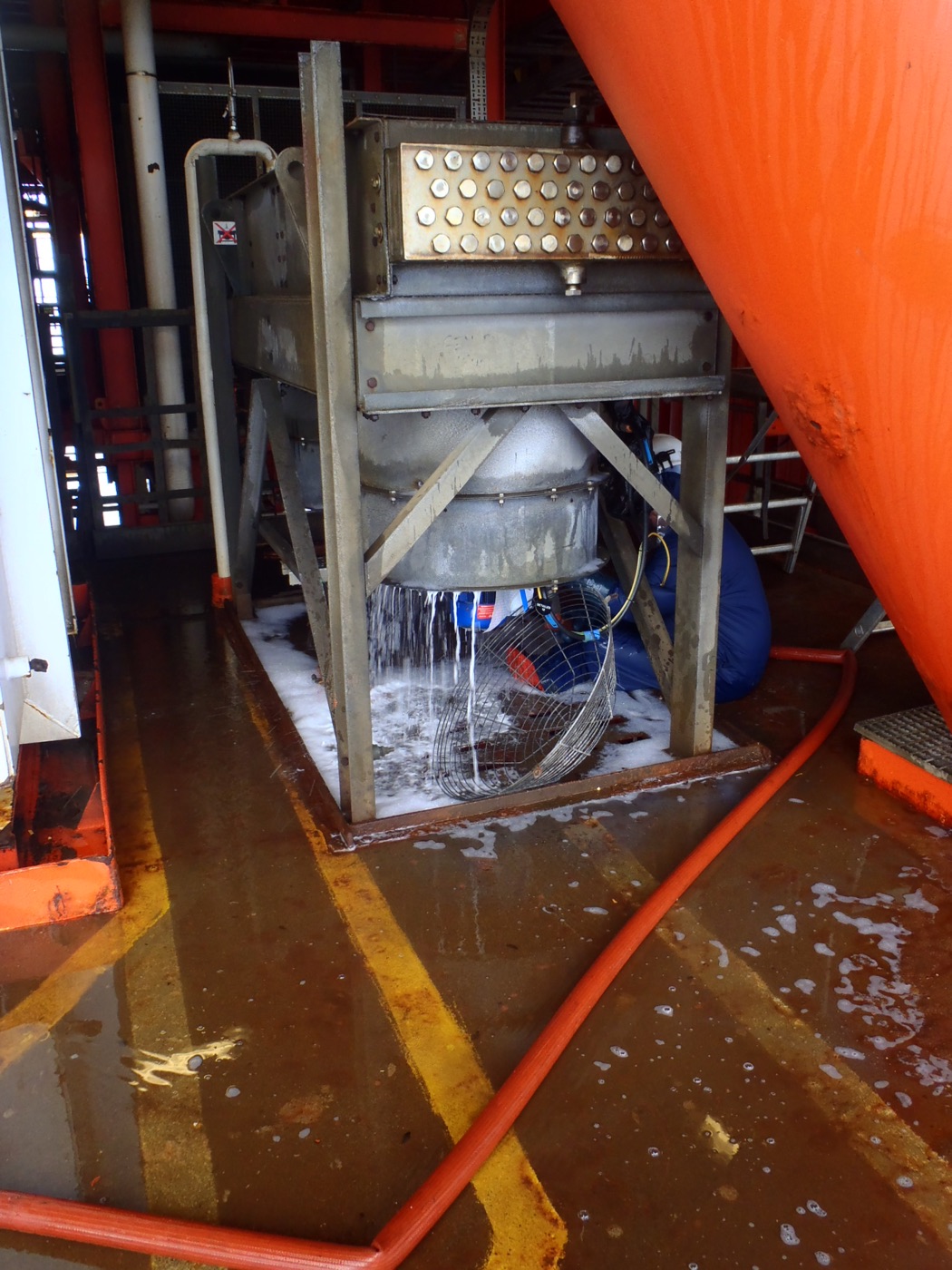
The photographs help show the practical constraints behind the RFI response: elevated access, scaffold interfaces, plenum work, water control and operating-site housekeeping.
Suitable for refinery, petrochemical, power and process sites with multiple air cooled heat exchangers.
Remove contamination without avoidable fin damage, bundle distortion or uncontrolled wash-water spread.
Work sequencing must respect release windows, ambient temperature limits, access routes and production risk.
Cleaning effectiveness can be verified through inspection, airflow, thermal and operating-data comparison.
Build the method around bundle condition, access and release windows.
For a large ACHE population, the cleaning method should not be treated as a single fixed operation repeated 350 times. Units vary by age, fan orientation, access, contamination type, isolation requirements and fin condition.
We prefer to agree a representative survey and trial sequence, confirm the cleanability and measurement method, then scale into a controlled programme with defined crew structure, equipment redundancy and daily reporting.
Non-abrasive external cleaning
The process can use controlled water flow, suitable cleaning chemistry where required, close-proximity cleaning and rinse stages. Pressure, nozzle type, working distance and angle are selected to protect fin geometry while removing contamination.
Three-month campaign planning
Where the customer needs completion inside a defined seasonal window, planning should include parallel crews, shift options, permit strategy, scaffold dependency tracking and standby equipment to reduce downtime caused by a single failure point.
Information mapped to typical RFI requirements.
The points below are written as a factual response framework. Project-specific figures, named case studies, training matrices and safety statistics should be inserted from controlled company records before formal submission.
Nearest operating support and mobilisation route.
Mobilisation should be confirmed against crew availability, equipment location, site induction requirements and notice period. For urgent scopes, a smaller assessment or make-safe crew can normally be separated from the main campaign team.
Cleaning method selection.
Online cleaning may be suitable where access, guarding, drift, electrical risk and plant conditions are controlled. Offline cleaning is preferred where internal plenum access, fan isolation or close-proximity work creates higher operational risk.
Pumps, nozzles, hoses and access equipment.
A large campaign should include spare critical parts, replacement nozzles, backup hoses, maintenance checks, contingency pump capacity and a defined process for equipment change-out without stopping the whole programme.
Technicians, supervision and shifts.
Delivery planning should define trained water jetting technicians, supervisors, permit holders, confined space or working-at-height resources, waste support and any scaffold or MEWP interfaces. Supervision ratios should increase where simultaneous work fronts are used.
Declare external support clearly.
Scaffolding, rope access, specialist waste disposal, chemical supply or additional labour support should be declared where used. Competency evidence should be supplied for any subcontracted activity that affects safety or quality.
Platforms, MEWPs, scaffold and plenum routes.
Access should be selected unit by unit. Forced draft units may require underside or plenum planning; scaffold dependency should be identified early because it can control productivity more than the cleaning rate itself.
Bunding, capture, filtration and disposal.
Controls can include local bunding, drain protection, silt capture, filtration, settlement, vacuum recovery and disposal through approved site routes. The plan should identify whether contamination is ordinary debris or potentially process-contaminated waste.
How results are demonstrated.
Evidence may include before and after photos, airflow measurement, delta temperature review, fan motor load, thermal imaging and operations feedback. The measurement plan should account for changing ambient conditions and plant load.
Water jetting and site controls.
Formal submission should include current safety statistics, water jetting training evidence, confined space and working-at-height competencies, risk assessments, method statements and emergency arrangements for high-pressure water work.
No pricing at RFI stage.
For a later RFQ, pricing can be structured by unit rate, day rate, time and materials, or a hybrid model. The most reliable structure depends on access certainty, fan condition, scaffold provision, waste route and agreed measurement scope.
Recommended first step
Complete a joint technical review of representative units, access constraints, contamination type and required release windows before fixing the final method.
Recommended trial
Select a small group of units with different access and fouling conditions, then measure the effect of cleaning before scaling into the full programme.
Recommended reporting
Use daily progress records, unit status, access blockers, waste volumes, equipment issues and before/after evidence to keep operations and procurement aligned.
Recommended exclusions
Do not assume scaffold, waste disposal, chemical approval, fan isolation or night-shift access is included unless confirmed in the final scope and site rules.